
Insights
Reports
Sector / Topic
Type
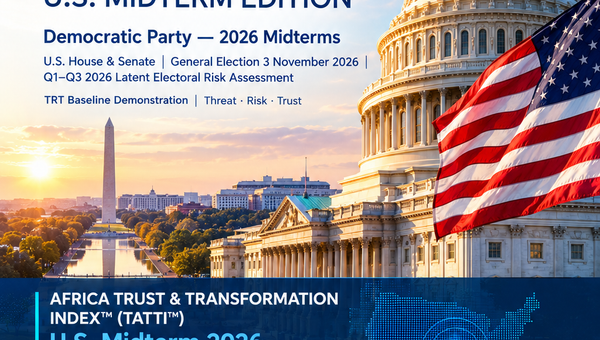
TRT Latent Electoral Risk Watchlist™: Democratic Party, 2026 Midterms
TRT scores Democratic majority-path risk at 51/100 (Elevated, easing from a Q2 peak of 55) ahead of the 3 November 2026 midterms. The national environment is favourable, with a generic-ballot lead of about 8-9 points. Redistricting, Senate geography and primary-season divisions leave the path to a majority narrow.
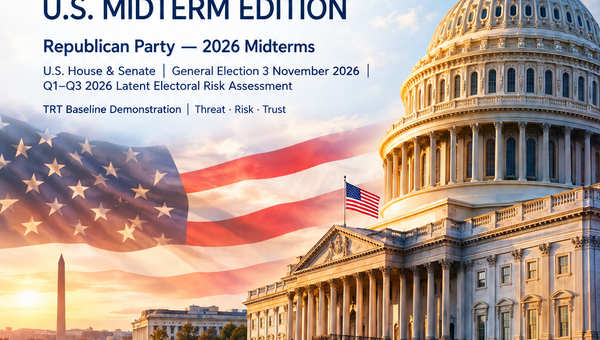
TRT Latent Electoral Risk Watchlist™: Republican Party, 2026 Midterms (U.S. Midterm Edition)
TRT scores Republican congressional exposure at 61/100 (Elevated, rising) ahead of the 3 November 2026 midterms. The score has risen every quarter as presidential approval fell to 39% and the Democratic generic-ballot lead widened to about 8-9 points. Republicans hold exactly 218 House seats, so correlated toss-ups are the central risk.
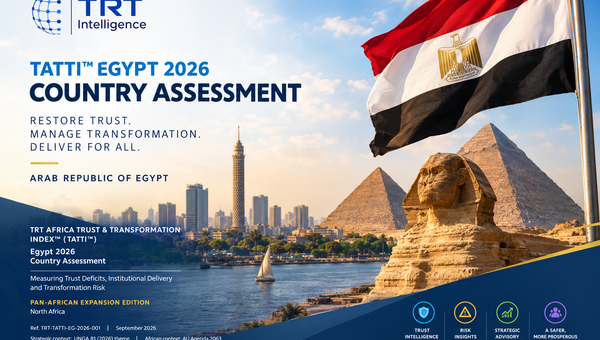
TATTI™ Egypt 2026 Country Assessment: Measuring Trust Deficits, Institutional Delivery and Transformation Risk
Egypt scores 66.3 on the TATTI™, which means High trust-deficit exposure. The state delivers on safety, electricity and external credibility. Trust deficits concentrate in administered prices, justice, information and official statistics. With inflation at 14.5% and a new Criminal Procedure Code taking effect on 1 October 2026, verifiable delivery is the strongest available counterweight to rising distrust.

TATTI™ South Africa 2026 Country Assessment: Measuring Trust Deficits, Institutional Delivery and Transformation Risk
South Africa scores 65.6 on the TATTI™, which means High trust-deficit exposure. National credibility has improved on electricity, debt and financial integrity. Jobs, municipal services, crime and anti-immigrant mobilisation still shape daily experience. With local elections on 4 November 2026 and the Madlanga final report due 16 November, October 2026 to March 2027 is the highest-risk window.
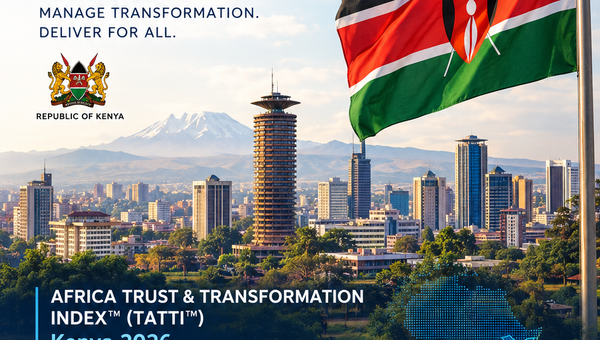
TRT Africa Trust & Transformation Index™ (TATTI™): Kenya 2026 Country Assessment
Kenya scores 63.2 on TATTI™, High trust-deficit exposure. The 2026 pattern is stable money but a contested state: macro stability is holding while fuel prices, protest policing, county service failures and debt service erode trust ahead of the August 2027 General Election.
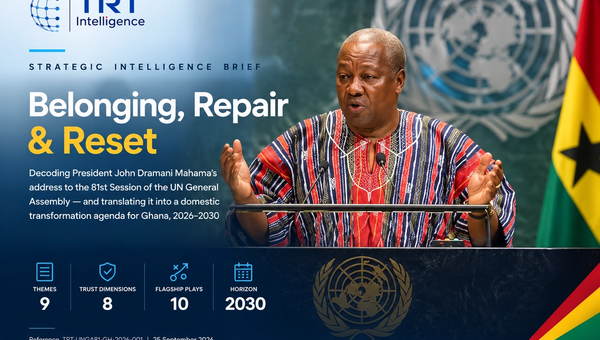
TRT UNGA 81 Strategic Intelligence Brief — Ghana: Belonging, Repair & Reset
TRT Intelligence’s UNGA 81 Strategic Intelligence Brief examines President John Dramani Mahama’s 81st UN General Assembly address and translates its global themes into a domestic transformation agenda for Ghana through 2030. The brief assesses global trust signals, Ghana’s macroeconomic credibility, five transformation frameworks and ten proposed flagship plays, while identifying implementation, fiscal, climate, credibility and election-cycle risks.
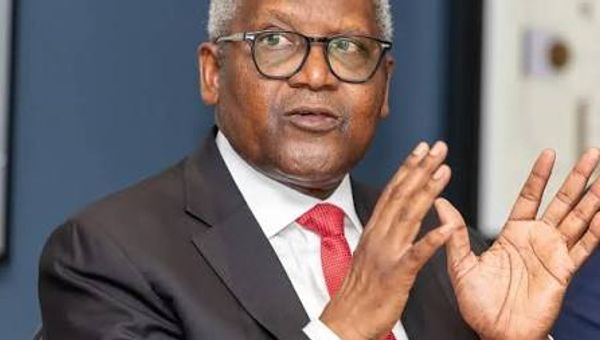
The Trust Imperative: Trust as the Operating Currency of Institutions
Trust is increasingly relevant to institutional decision-making because confidence can influence capital, stakeholder behaviour and counterparties before changes become visible in conventional financial outcomes, just as Aliko Dangote has put it plainly: “money follows trust”. This TRT Intelligence statement examines trust as an operating signal and explains how shifts in narrative, sentiment and institutional credibility can provide leadership with earlier intelligence on changing stakeholder confidence.
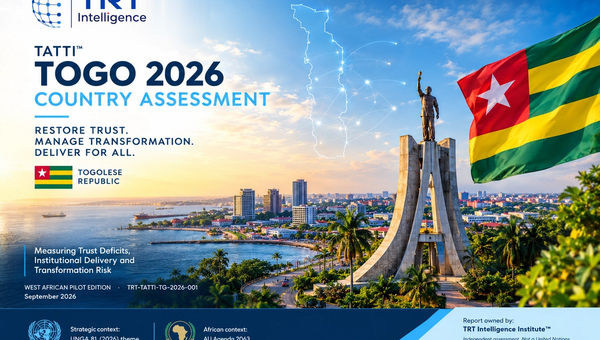
TRT Africa Trust & Transformation Index™ (TATTI™) Togo 2026 Country Assessment
The TRT Africa Trust & Transformation Index™ (TATTI™) Togo 2026 Country Assessment measures trust deficits, institutional delivery and transformation risk in Togo. The assessment records a composite score of 69.7, indicating High trust-deficit exposure, with the strongest pressures concentrated in institutional governance, economic and livelihood trust, justice and rule of law, and information and digital trust.
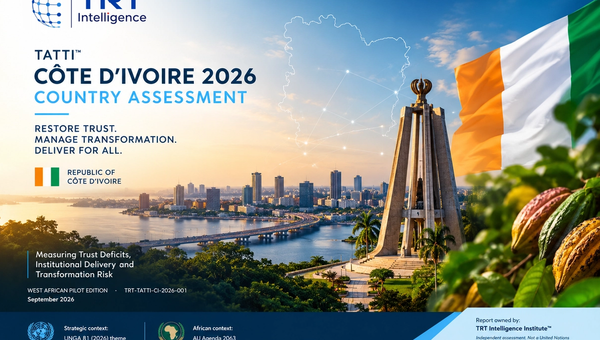
TRT Africa Trust & Transformation Index™ (TATTI™) Côte d’Ivoire 2026 Country Assessment
The TRT Africa Trust & Transformation Index™ (TATTI™) Côte d’Ivoire 2026 Country Assessment measures the country’s trust-deficit exposure, institutional delivery capacity and transformation readiness. Côte d’Ivoire records a TATTI™ composite score of 57.1, placing it in the Moderate trust-deficit exposure band. The assessment identifies institutional governance, economic and livelihood trust, and rule of law as the principal areas requiring continued monitoring, while highlighting a gap between established reform architecture and citizen-facing participation and income-verifiability outcomes.
TRT TATTI™ Nigeria 2026: Country Assessment on Trust Deficits, Institutional Delivery & Transformation Risk
The TRT Africa Trust & Transformation Index™ (TATTI™) Nigeria 2026 Country Assessment measures Nigeria’s trust-deficit exposure, institutional delivery capacity and transformation risks. Nigeria records a TATTI™ composite score of 68.7, placing the country in the High trust-deficit exposure band. The assessment identifies peace and security, public service delivery, social cohesion and rule of law as the most significant areas of exposure, while highlighting a measurable divergence between improving macroeconomic credibility and citizens’ lived experience.
TRT Africa Trust & Transformation Index™ (TATTI™) — Ghana 2026 Country Assessment
Ghana registers a TATTI™ composite of 57.9 — moderate trust-deficit exposure, just 3.1 points below the High threshold. The defining pattern is a macro–lived trust divergence: macroeconomic stabilization (IMF ECF completed, inflation at 5.0%) has outpaced citizens' everyday experience of the state, with rising bribery at service points, record Auditor-General irregularities, acute water-quality stress from illegal mining, and cocoa farmgate payment arrears.
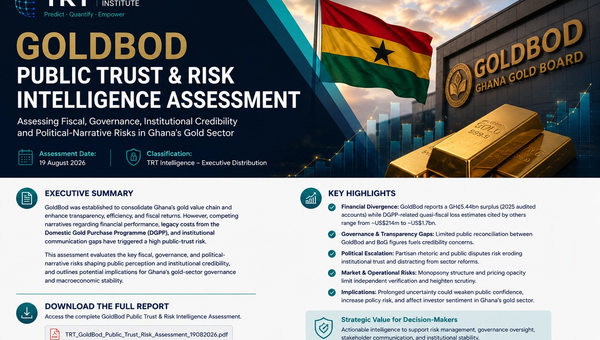
GOLDBOD PUBLIC TRUST & RISK INTELLIGENCE ASSESSMENT
The TRT Intelligence Institute presents an executive assessment of the fiscal, governance, institutional credibility, and political-narrative risks surrounding Ghana's GoldBod. The report examines the unresolved divergence between GoldBod's audited entity-level surplus and disputed Bank of Ghana Domestic Gold Purchase Programme (DGPP) quasi-fiscal costs, and assesses how the resulting uncertainty could affect public trust, institutional legitimacy, investor confidence, and Ghana's gold-sector governance.
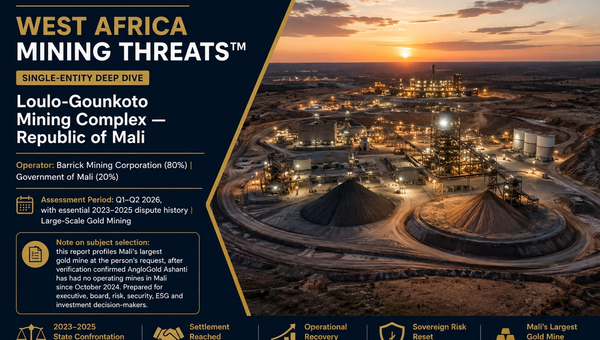
WEST AFRICAN MINING THREAT™ - Loulo-Gounkoto: The Mining Dispute That Reset Sovereign Risk in Mali
Loulo-Gounkoto has returned to production, but Mali's confrontation with Barrick has permanently altered the country's mining-risk equation. A dispute that escalated from mining-code reform to gold seizure, employee detention, a CEO arrest warrant and court-ordered state administration ultimately ended in a settlement and a 10-year permit extension. For investors and operators, however, the key intelligence lesson is that sovereign intervention risk in Mali can no longer be treated as a remote or company-specific event.
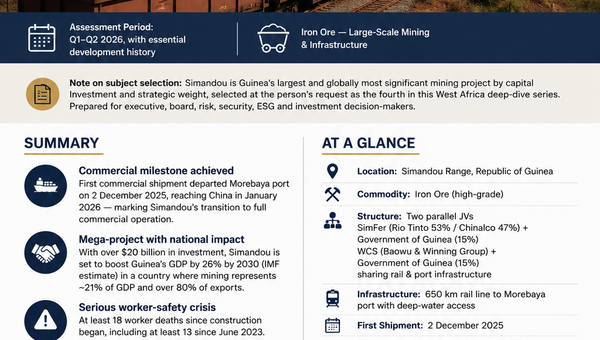
Simandou at Scale: Guinea’s Mining Breakthrough Meets a Critical Worker-Safety Risk
Simandou has entered a new era of commercial reality, but its rapid emergence as one of Africa’s largest mining developments is unfolding alongside a serious worker-safety and governance challenge. With more than $20 billion invested, first commercial shipments in December 2025 and Guinea expecting major economic gains, the project is strategically transformative. Yet at least 18 reported worker deaths and three production suspensions following fatal incidents create a material operational-continuity and governance risk that investors, lenders, offtakers and policymakers cannot treat as a peripheral ESG issue.
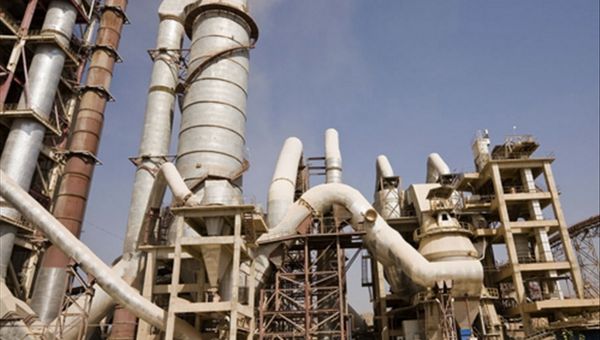
West Africa’s Cement Sector: The Latent Community Risks That Could Disrupt Production
West Africa's cement manufacturing sector is operating within an increasingly complex risk environment shaped by community grievances, environmental pressures, political transitions, regional trade fragmentation and expanding security threats. TRT Intelligence's Q1–Q2 2026 assessment identifies the most consequential latent risks across 15 West African markets, highlighting jihadist-driven corridor disruption in the Sahel, environmental and community tensions, land disputes, political instability and supply-chain vulnerabilities as critical issues for cement producers and investors.
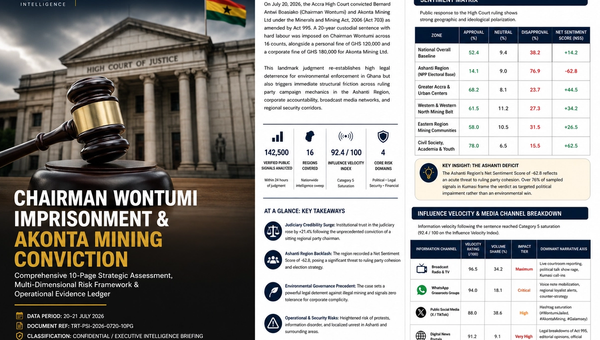
Chairman Wontumi Imprisonment & Akonta Mining Conviction: Political, Social and Governance Risk Assessment
The conviction of Bernard Antwi Boasiako (Chairman Wontumi) and Akonta Mining Ltd marks a significant moment in Ghana's environmental enforcement and political-risk landscape. TRT Intelligence's assessment examines the immediate effects of the judgment across public sentiment, Ashanti regional political structures, institutional trust, media ecosystems, natural-resource governance and security. Based on an analysis of 142,500 public signals collected across all 16 regions within 24 hours, the assessment identifies a sharp national–regional sentiment divide and outlines potential 30-, 90- and 180-day risk pathways.

THE TRT RISK-TO-ROI WATCH™ - Capital One Latent Risk Intelligence Q1 - Q2 2026
Capital One enters the second half of 2026 from a position of financial strength, but beneath the headline performance are several latent risks that could materially affect financial outcomes, customer experience and institutional trust. TRT Intelligence's Q1–Q2 2026 assessment identifies a 58/100 Moderate-Elevated Latent Risk Exposure Score, with Discover integration and migration risk, legacy litigation, credit normalization, payment-network transition, operational resilience, cybersecurity and concurrent acquisition integration emerging as key areas requiring continuous monitoring.
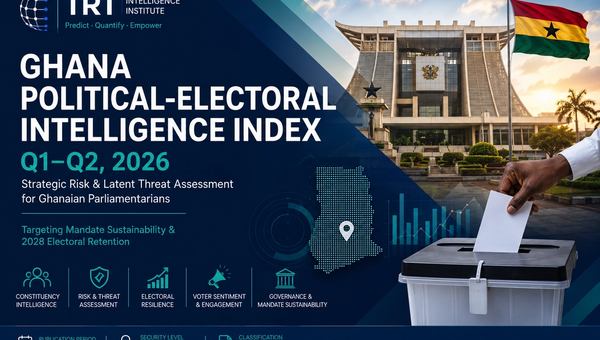
Ghana Political-Electoral Intelligence Index (Q1–Q2 2026): Strategic Risk Assessment for Parliamentary Mandate Sustainability
The TRT Intelligence Institute presents the Ghana Political-Electoral Intelligence Index (Q1–Q2 2026)—a strategic intelligence assessment designed to help Members of Parliament, political stakeholders, governance institutions, and policy analysts understand the evolving political, electoral, and constituency-level risks that could influence mandate sustainability ahead of Ghana's 2028 General Elections.
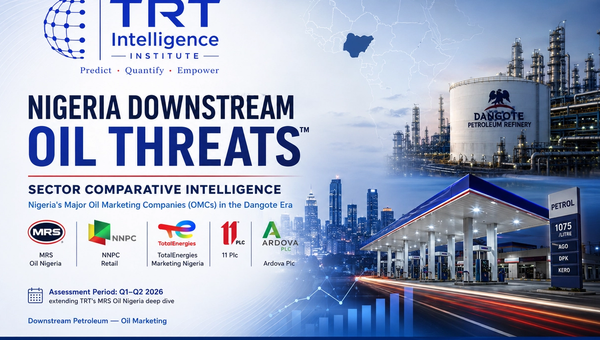
Nigeria Downstream Oil Sector Comparison (Q1–Q2 2026): Strategic Intelligence on Major Oil Marketing Companies in the Dangote Era
The TRT Intelligence Institute presents a comparative intelligence assessment of Nigeria's five leading Oil Marketing Companies (OMCs)—MRS Oil Nigeria, NNPC Retail, TotalEnergies Marketing Nigeria, 11 Plc, and Ardova Plc. The report examines how the emergence of the Dangote Petroleum Refinery is reshaping competition, pricing, governance, market transparency, and strategic positioning across Nigeria's downstream petroleum sector.
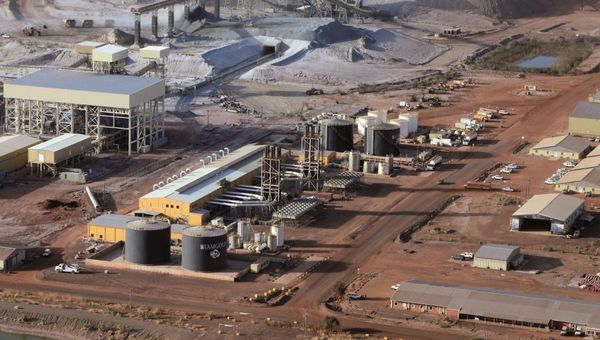
Essakane Gold Mine (Burkina Faso) Deep Dive (Q1–Q2 2026): Strategic Intelligence on Security, Resource Nationalism and Investment Risk
The TRT Intelligence Institute presents an executive intelligence assessment of the Essakane Gold Mine, Burkina Faso's largest gold-producing operation. This deep-dive report examines the mine's evolving security environment, resource nationalism, ownership developments, ESG considerations, and geopolitical risks to support informed decision-making by executives, investors, security professionals, and policymakers.
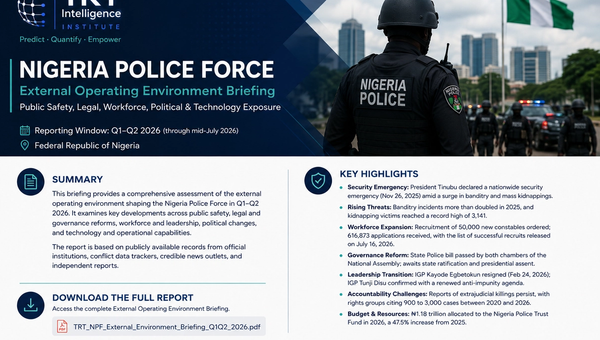
Nigeria Police Force External Operating Environment Briefing (Q1–Q2 2026): Strategic Intelligence on Security, Governance and Operational Risk
The TRT Intelligence Institute presents a comprehensive external operating environment briefing on the Nigeria Police Force, examining the evolving security landscape, workforce expansion, governance reforms, public accountability, technology capabilities, and operational challenges during Q1–Q2 2026. The report provides intelligence-led insights to support informed decision-making by security leaders, policymakers, researchers, and institutional stakeholders.
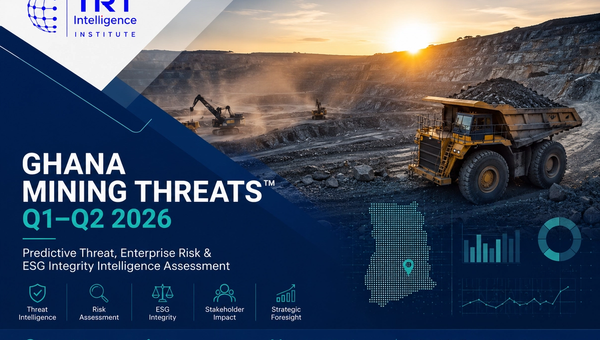
Ghana Mining Threat Assessment (Q1–Q2 2026): Strategic Risk Intelligence for Ghana's Large-Scale Mining Sector
TRT Intelligence Agency's Ghana Mining Threats™ – Q1–Q2 2026 delivers an executive intelligence assessment of Ghana's evolving mining risk landscape. The report examines regulatory reforms, illegal mining, security developments, ESG integrity challenges, and company-specific threat profiles to help executives, investors, security leaders, and policymakers anticipate emerging risks and make informed strategic decisions.
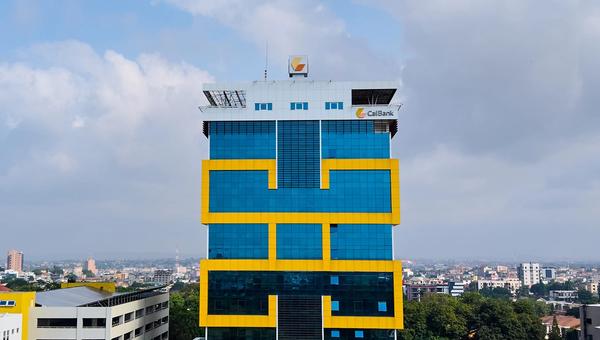
CAL Bank PLC Executive Threat Intelligence Assessment (Q1–Q2 2026): Cybersecurity, Fraud and Regulatory Risk Outlook
The TRT Intelligence – CAL Bank PLC Executive Threat Intelligence Assessment (Q1–Q2 2026) provides an independent, evidence-based analysis of the external threats shaping CAL Bank's operating environment. While the Bank has strengthened its financial position following a successful capital raise and the lifting of Prompt Corrective Action (PCA) restrictions, the report identifies emerging cyber, fraud, regulatory, macroeconomic, and reputational risks that require sustained executive attention.
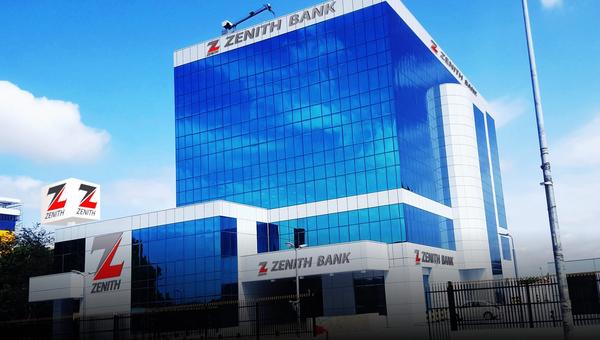
Zenith Bank PLC Executive Threat Intelligence Assessment Identifies Rising Digital Fraud and Cyber Risks in Q1–Q2 2026
TRT Intelligence's latest assessment highlights the key fraud, cyber, regulatory, and macroeconomic threats shaping Zenith Bank PLC's operating environment, with digital payment fraud and CISD 2026 compliance emerging as the highest Board-level priorities.

Aurora Police Department External Operating Environment Briefing (Q1–Q2 2026): Public Safety, Governance and Strategic Risk Assessment
Environment Briefing (Q1–Q2 2026) provides an independent assessment of the external factors shaping the operational environment of the Aurora Police Department (APD) in Aurora, Colorado.
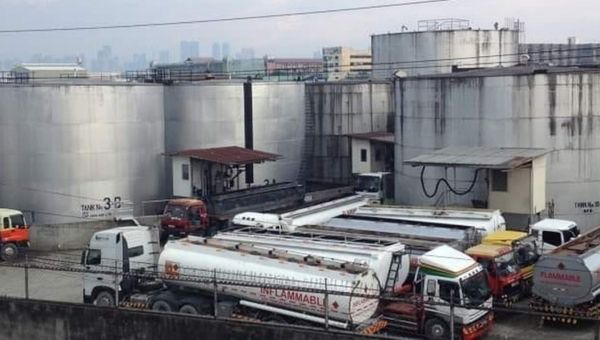
West Africa Downstream Oil Intelligence Report (Q1–Q2 2026): Comparative Analysis of Leading Oil Marketing Companies Across Five Markets
The TRT Intelligence Institute – West Africa Downstream Oil Threats™: Five-Country OMC Comparative Intelligence Report (Q1–Q2 2026) provides a strategic comparison of the leading Oil Marketing Companies (OMCs) across Ghana, Senegal, Côte d'Ivoire, Guinea, and Burkina Faso. The report examines emerging competitive dynamics, ownership transitions, regulatory developments, market structures, and downstream petroleum risks shaping the region's evolving energy landscape.
SIC Insurance PLC Latent Risk Intelligence Report (Q1–Q2 2026): Governance, Financial Integrity and Strategic Risk Outlook
The TRT Risk-to-ROI Watch™ – SIC Insurance PLC (Ghana) Latent Risk Intelligence Assessment (Q1–Q2 2026) provides an independent, evidence-based evaluation of the hidden and emerging risks that could shape SIC Insurance PLC's financial performance, governance, regulatory standing, and long-term competitiveness. SIC has delivered one of its strongest financial results in recent years, but the assessment highlights underlying risks in governance, reporting reliability, investment exposure, underwriting concentration, and market competitiveness. Applying TRT Intelligence’s Threats, Risks & Trust framework, the report equips boards, executives, investors, regulators, and risk professionals with forward‑looking intelligence to support proactive decisions before risks escalate into material events.

AngloGold Ashanti (Ghana) Deep-Dive Intelligence Report (Q1–Q2 2026): Mining Risk, Regulatory Developments and Strategic Outlook
The TRT Intelligence Agency – AngloGold Ashanti (Ghana) Deep Dive (Q1–Q2 2026) provides an independent, evidence-based assessment of AngloGold Ashanti's operations in Ghana, focusing on the Obuasi and Iduapriem mines. The report examines emerging regulatory, operational, security, ESG, and investment risks that could influence the company's operating environment during the second half of 2026 and beyond. Prepared for executives, boards, investors, risk professionals, security practitioners, and ESG decision-makers, the assessment draws exclusively on publicly available information and applies TRT's Threats, Risks & Trust analytical methodology to identify key developments requiring strategic attention.
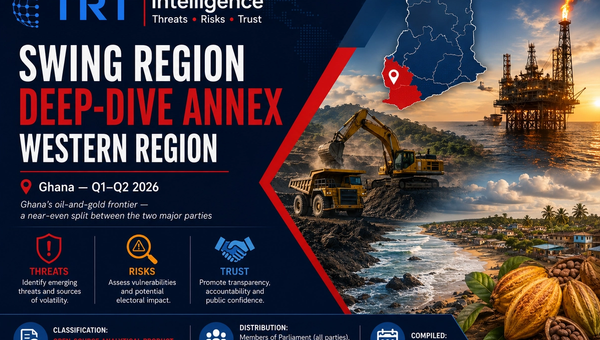
Western Region Swing Region Intelligence Report (Q1–Q2 2026): Electoral Risks, Strategic Outlook and Constituency Analysis
The annex emphasizes the Western Region of Ghana as a pivotal electoral battleground in the run‑up to the 2028 General Elections. It underscores the region’s near‑even political balance alongside its national economic significance, given its oil and gas industry, gold mining, cocoa production, and coastal communities. The document integrates constituency‑level intelligence with assessments of political, economic, and environmental risks, while offering strategic recommendations for policymakers, Members of Parliament, researchers, and governance stakeholders. All findings are based solely on publicly available information.
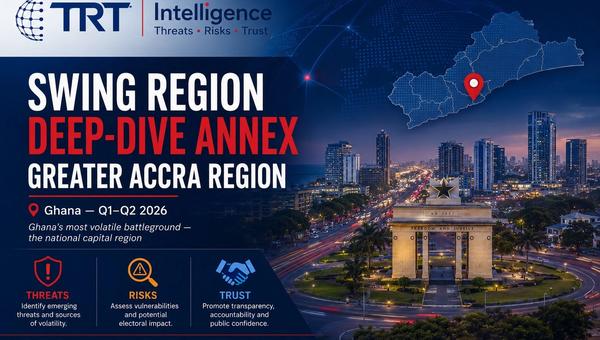
Greater Accra Swing Region Intelligence Report (Q1–Q2 2026)
Greater Accra remains Ghana's most politically competitive and strategically important region ahead of the 2028 General Elections. This TRT Swing Region Deep-Dive Annex provides an evidence-based assessment of the region's evolving political landscape, identifying high-risk constituencies, emerging electoral threats, and the key socio-economic factors likely to influence voter behaviour. Drawing exclusively on publicly available information, the report examines constituency-level volatility, regional threat indicators, and practical considerations for policymakers, Members of Parliament, political researchers, and governance stakeholders.