
Kenya's 2026 Trust Profile: Stable Money, Contested State
A new country assessment from the TRT Intelligence Institute finds Kenya's 2026 trust conditions shaped by monetary stability alongside cost-of-living pressure felt more directly by households. The report scores the country 63.2 out of 100 on its Trust & Transformation Index (TATTI), in the “High exposure” band.
Monetary indicators have held steady. Headline inflation was 6.6% in August, up from 4.3% in February but still inside the Central Bank of Kenya's 2.5–10% target range. The bank held its policy rate at 8.75% in August and reported reserves of $15.25 billion, equal to 6.3 months of import cover, while GDP grew 5.3% in the first quarter.
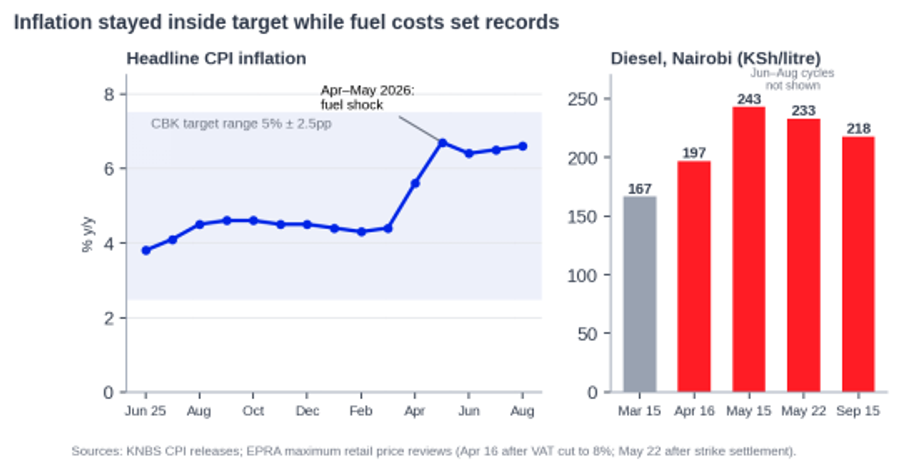
Fuel and transport costs moved differently. Diesel in Nairobi reached a record KSh 242.92 per litre in May, before easing to KSh 218 by mid-September, and transport inflation stood at 15.7% in August against a 6.6% headline rate. Public debt reached KSh 12.82 trillion, or 69.9% of GDP, by March — a level the IMF classifies as high risk of distress — with pending government bills of KSh 465.87 billion.
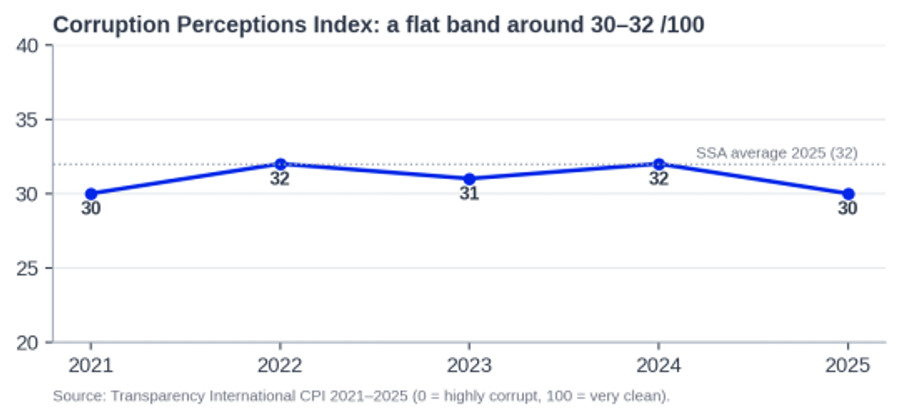
Governance indicators have stayed largely flat. Transparency International's 2025 Corruption Perceptions Index scored Kenya 30 out of 100, down from 32, below the Sub-Saharan African average. The Ethics and Anti-Corruption Commission reported KSh 3.4 billion in assets recovered in 2024/25 and a rise in convictions from 12 to 33, though its head said in April that losses to graft still exceeded recoveries.
“Kenya's monetary institutions have earned real credibility with lenders and investors,” said Messan Mawugbe, PhD, Lead Analyst at the TRT Intelligence Institute. “The open question is whether that stability reaches households before fuel and debt-service pressure does.”
The assessment concludes that a published fuel-price stabilisation account, a statutory schedule for county exchequer releases, and regular reporting on pending bills would offer a verifiable path toward narrowing the gap between macro credibility and household experience, ahead of the August 2027 General Election.
Lead Analyst: Messan Mawugbe(PhD)
Managing Director, TRT Intelligence Institute™
Messan Mawugbe(PhD), Founder and Lead Risk Architect at TRT Intelligence, is a data scientist and corporate risk strategist with over 20 years’ experience in narrative intelligence, institutional risk and strategic data analysis.
Source: TRT AFRICA TRUST & TRANSFORMATION INDEX™ (TATTI™), Kenya 2026 Country Assessment, TRT Intelligence Institute™ (Continental Series Edition — East Africa, September 2026). Independent assessment; not a United Nations or African Union publication or endorsed methodology.